Drones vs. Ladders: Why Tech-First Roof Inspections Are the Only Way to Safely Catch Invisible Hail Damage
Table of Contents
- The Problem With Traditional Ladder Inspections
- How Drone-Assisted Roof Inspections Work
- Thermal Imaging + AI Measurement
- Drone Inspection vs. Ladder Inspection
- Zero Foot Traffic, Zero Risk to Your Shingles
- What This Means for Peoria Homeowners
- Turning an Inspection Into a Fully Covered Roof
- Frequently Asked Questions
After a hailstorm rolls through Central Illinois, it’s not unusual to see unfamiliar trucks parked on your street — contractors who showed up uninvited, climbed onto your roof, and somehow “found” damage that wasn’t there before they got up there. It’s a pattern homeowners have learned to be wary of, and for good reason.
At the same time, a roof that actually was damaged by hail often looks completely normal from the ground. The cracks that lead to leaks are frequently smaller than a coin, hidden in the mat of an asphalt shingle where a naked eye — or a rushed inspector — will never spot them.
Both problems point to the same solution: an inspection process that removes human guesswork and foot traffic from the equation entirely. That’s why Rainforcing Roofing relies on drone-assisted inspections, thermal imaging, and AI-powered measurement tools for every storm damage assessment we perform in Peoria and the surrounding communities.
The Problem With Traditional Ladder Inspections
A ladder-and-clipboard inspection has been the industry standard for decades, but it comes with real limitations:
- Safety risk — Climbing onto a steep or wet roof after a storm is one of the leading causes of injury in the roofing trade.
- Foot-traffic damage — Every step on an asphalt shingle roof can dislodge protective granules, especially on a roof that’s already stressed from hail impact. Some homeowners have unknowingly ended up with new damage caused by the inspection itself.
- Missed micro-fissures — A visual, ground-level or walk-on inspection can catch obvious bruising but frequently misses the fine cracks in the shingle mat that don’t show up until the roof starts leaking a year or two later.
- Subjectivity — Without high-resolution, geotagged imagery, an inspection report often comes down to one person’s word — which is exactly what makes insurance adjusters skeptical.
- The “storm chaser” reputation problem — Risk-averse homeowners have every reason to distrust a stranger who wants to get on their roof with no documentation and no explanation.
How Drone-Assisted Roof Inspections Work
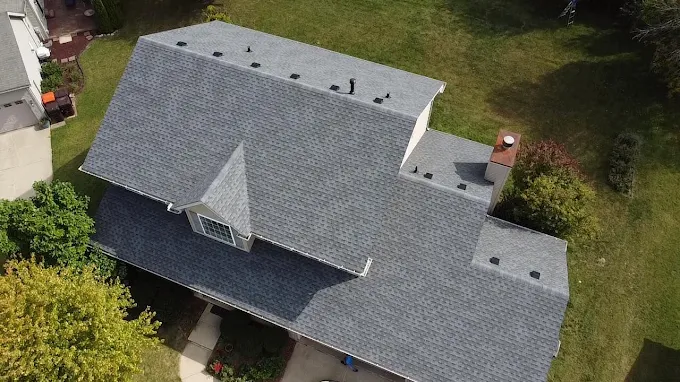
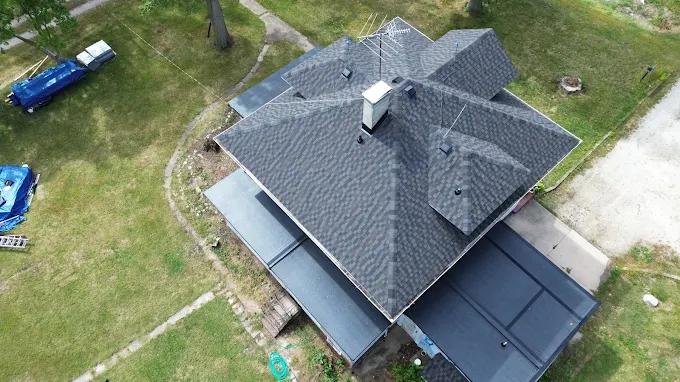
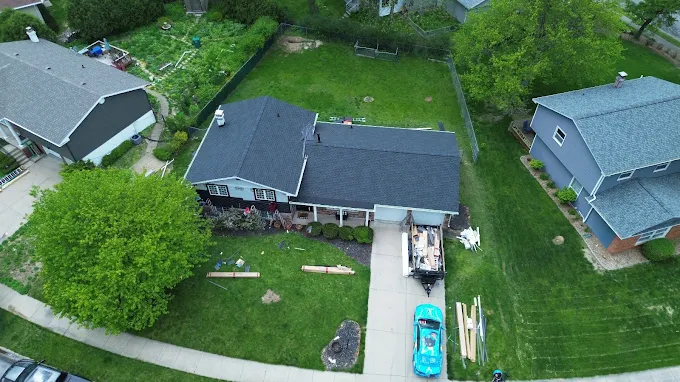
Instead of sending a technician up a ladder, we launch a drone equipped with a high-resolution camera to systematically photograph and map every plane of your roof. This gives us:
- 100% coverage of the roof surface, including areas a ladder inspection would normally skip for safety reasons (steep slopes, high peaks, complex rooflines)
- High-resolution, time-stamped, geotagged imagery that becomes part of your permanent project file
- A visual record you can see for yourself — not just a verbal summary of what someone claims they found
Because the drone never touches the shingles, there is no risk of the inspection itself causing damage — which matters both for your roof’s integrity and for the credibility of the report if your claim is ever questioned.
Thermal Imaging + AI Measurement: Building a Report Adjusters Can’t Easily Dispute
A photo alone tells you what the surface looks like. It doesn’t tell you what’s happening underneath. That’s where thermal imaging and AI-powered measurement tools come in.
- Thermal imaging detects temperature differences in the roof deck that indicate trapped moisture — a strong sign of a compromised shingle mat, even when the surface still looks intact.
- AI-powered measurement software calculates precise hail spacing, impact size, and slope-by-slope damage density, generating data that mirrors the same measurement standards insurance carriers already use internally.
- Combined documentation — photos, thermal data, and measurement reports — turns “trust us” into a technical file that stands up to adjuster scrutiny.
This is a core part of how we support homeowners through the insurance claims process: the stronger the documentation, the less room there is for a carrier to approve a partial or non-compliant repair.
| Factor | Traditional Ladder Inspection | Drone-Assisted Inspection |
|---|---|---|
| Roof Coverage | Limited to accessible, safe areas | 100% of the roof, every plane |
| Risk to Inspector | Falls, slips, injury | None — technician stays on the ground |
| Risk to Your Shingles | Possible granule loss from foot traffic | Zero foot traffic on the roof |
| Documentation | Written notes, occasional photos | High-resolution, geotagged imagery |
| Hidden Damage Detection | Visual only | Thermal imaging reveals subsurface moisture |
| Measurement Accuracy | Estimated by eye | AI-calculated, data-backed |
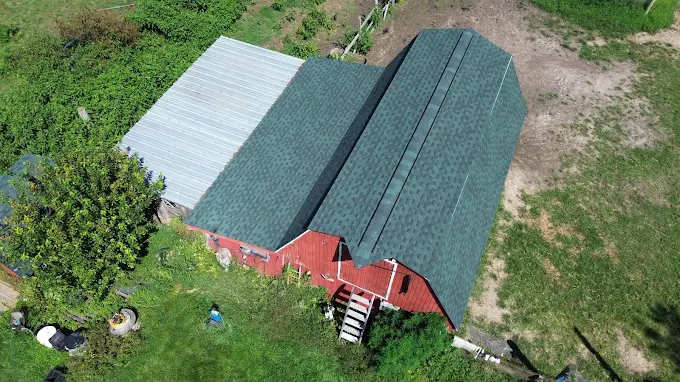
Zero Foot Traffic Means Zero Risk to Your Shingles
Asphalt shingles are more vulnerable right after a hailstorm than at almost any other time — the mat has already absorbed impact stress, and extra weight or friction can knock loose granules that were barely hanging on.
A digital-first inspection means nobody walks your roof to find out if it’s damaged. You get a full report without adding a single new stress point to a roof that’s already been through enough.
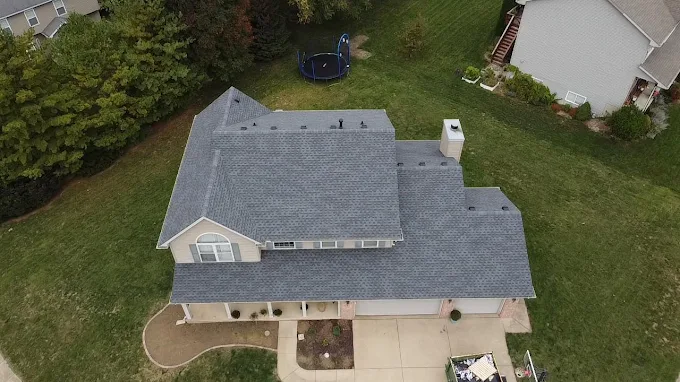
What This Means for Homeowners in Peoria and Central Illinois
Illinois consistently ranks among the states with the highest number of hail events nationwide, and Central Illinois communities — Peoria, East Peoria, Dunlap, Morton, Washington, Bloomington, Normal, and the surrounding areas — see their share of severe convective storms every spring and summer.
When a storm moves through, the difference between a properly documented claim and an underpaid one often comes down to the quality of the inspection that happened first.
If you suspect your roof took a hit during the last storm, our storm damage roof repair team can schedule a free, no-obligation drone inspection and walk you through exactly what the imagery shows — before anyone ever discusses a repair.
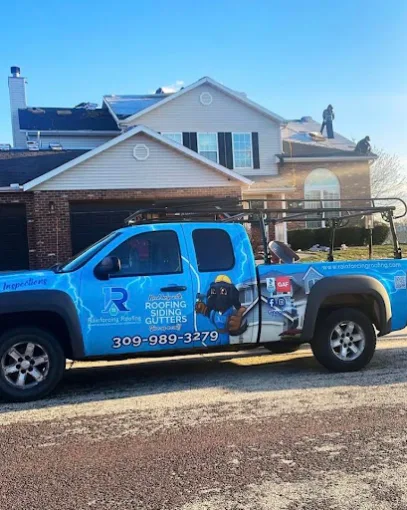
Turning a Tech-First Inspection Into a Fully Covered, Code-Compliant Roof
A drone inspection is only the first step. As a GAF Certified Plus contractor, we pair that documentation with a scope of work that meets manufacturer installation requirements and local building codes — not just whatever the initial insurance estimate happens to cover.
And if a full replacement is on the table, we offer flexible options through our financing partner so a proper repair doesn’t have to wait on your budget.
Hail and wind damage remain the single most common cause of homeowner insurance claims nationwide, and according to National Weather Service storm data cited by the Insurance Information Institute, Illinois was among the states with the highest number of hail events in 2025 — a strong reminder that a fast, accurate inspection after any storm is worth the ten minutes it takes to schedule one. You can review the latest hail statistics directly from the Insurance Information Institute.
FAQ’s
Will using a drone inspection slow down my insurance claim?
No — if anything, it speeds things up. A drone inspection produces the same day, high-resolution documentation an adjuster needs, which means fewer follow-up visits and fewer delays waiting on additional evidence.
Can thermal imaging really detect hail damage that isn't visible on the surface?
Yes. Thermal imaging picks up temperature variations caused by trapped moisture beneath the shingle, which is one of the earliest signs of a compromised roof deck — often before any visible leak develops inside the home.
Does a drone inspection mean no one ever walks on my roof?
In most cases, yes. The drone captures full-surface imagery and measurements without foot traffic. In rare situations where a physical sample is needed (for example, confirming a specific manufacturer defect), our technicians will explain exactly why and how it will be done safely.
How do I schedule a drone inspection in Peoria or the surrounding area?
Call (309) 989-3279 or contact us online to schedule your free, no-obligation inspection. We serve Peoria, East Peoria, Dunlap, Morton, Washington, Bloomington, Normal, and the surrounding Central Illinois communities.
Is it safe to wait a few months after a storm to start repairs?
While you have time to file a claim, waiting too long can lead to secondary damage like mold, wood rot, or attic insulation damage. It is best to get a professional inspection immediately to document the damage before it worsens.